


DOBRO DESIGN: LANDSCAPES ROOTED IN PLACE

Dobro Design creates enduring landscapes shaped by the particular character of a place—its land, ecology, architecture, climate, history, and atmosphere.
Drawing on deep training in Japanese garden practice, landscape architecture, ecological design, horticulture, construction, and stewardship, we bring these disciplines together to create individual works of landscape—rooted in their setting, thoughtful in their landform, restrained in their materials, immersive in their plantings, and designed to deepen with time.

Our work is not defined by a particular garden style, but by a particular way of seeing. We look closely at what a place already contains and allow those qualities to guide the work. That way of seeing is shaped by Japanese garden tradition: an enduring practice of observing landscape closely, working with natural materials, composing with restraint, and understanding the garden through season and time. We carry those principles into contemporary landscapes without reproducing a prescribed aesthetic.
The forms may change. The place changes. The way of seeing endures.
The purpose is ultimately human: to create gardens that draw people into a deeper experience of nature.
Colorado-based · Working throughout North America
Dobro Design works across private gardens, residential landscapes, and public and cultural landscapes. Our work has been internationally and nationally recognized for landscape design, research, and garden practice. The scale and setting may change, but the way we see remains consistent: understand the character of the site, compose the landscape as a whole, and create something that belongs there.
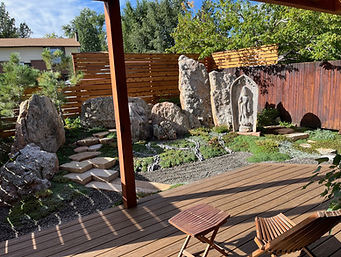


A garden is never quite finished. It changes with the seasons, with weather and growth, with the people who inhabit it and the years that pass. Our role is to create the conditions for that change—to make landscapes that become more themselves over time.
A thoughtful landscape begins with understanding the place. Dobro Design welcomes inquiries for substantial private gardens, residential landscapes, public and cultural projects, and significant landscape transformations—particularly where architecture, land, planting, and long-term stewardship can be considered together.
Start a project inquiry by telling us about the property, the architecture, the landscape, and the opportunity.